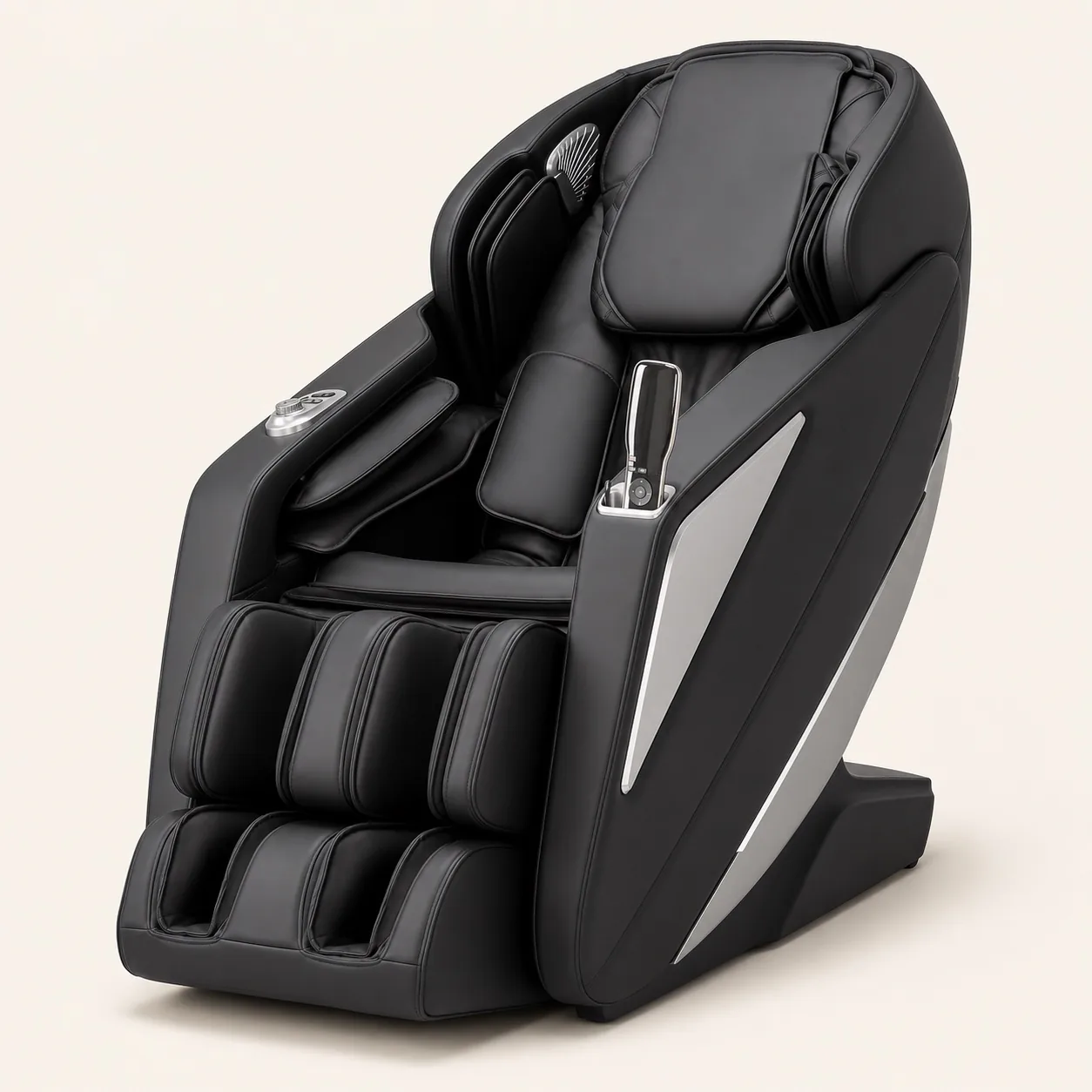
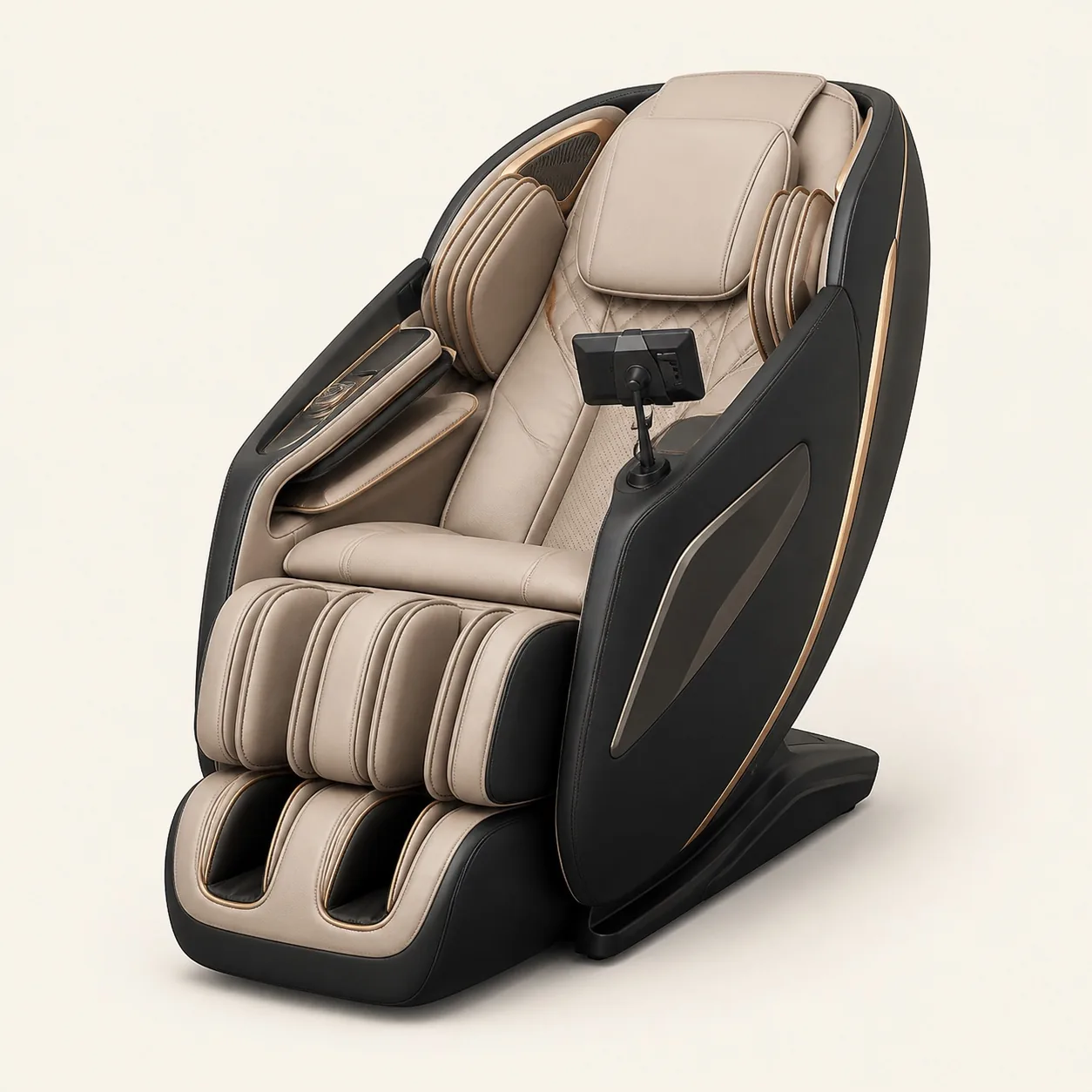
2D vs 3D vs 4D Massage Chairs: What Changes—and What Does Not
The labels describe roller control, but brands do not implement them identically. Use them as a starting point, then compare the actual adjustments.
By the Recline Guide Editorial Team · Fact-checked against cited manufacturer or Amazon-linked documentation · Last reviewed August 29, 2026
How we built this shortlist We compare published fit, room, mechanism, delivery, and warranty facts. We do not claim personal testing or medical outcomes. Missing specifications stay labeled as missing.
Buyers wanting adjustable-depth programs and a broad stated range
4D 55-inch SL-track
4′9″–6′2″ Capacity: 300 lb in current extracted specification
Placement dimensions conflict across extracted listing materials; verify current diagram Reclined: Verify current Amazon listing diagram
Shiatsu foot rollers and calf air compression
Affiliate disclosure: Recline Guide may earn from qualifying purchases through Human Touch or Amazon. As an Amazon Associate, Recline Guide earns from qualifying purchases. Prices and availability change, and no price is stored on this page.
In a typical 2D chair, the carriage controls vertical travel and roller width. In 3D, the rollers can also project farther toward the body or retract, giving the user more control over depth. In 4D, manufacturers usually program more variable speed, rhythm, or pacing on top of 3D movement.
The word “usually” matters. There is no single retail label that makes every brand’s implementation identical. Read the manual for the exact depth, speed, width, and zone controls.
Who should pay for 3D or 4D
Consider 3D when adjustable depth is central to your comfort and more than one person will use the chair. Consider 4D when you value more nuanced automatic routines and the exact chair also wins on fit, warranty, and room constraints.
Stay with 2D when you prefer predictable pressure or would rather spend the budget on better fit, delivery, heat, foot massage, or seller support. Mechanism tier cannot compensate for a chair that misses the shoulders or does not fit through the door.
SHOPPER QUESTIONS
Frequently asked questions
Is a 4D massage chair always better than a 3D chair?
No. It may offer more programmed variation, but fit, usable controls, warranty, track coverage, and personal pressure preference can make a 3D chair the better purchase.
Is 3D massage more intense than 2D?
A 3D mechanism can usually project farther toward the body and lets the user adjust depth. Actual intensity also depends on padding, program, roller design, and body position.
Does 4D mean four physical directions?
Not in the same simple geometric sense as 2D and 3D. Retailers generally use 4D for variable speed or rhythm layered onto 3D depth movement.